- What is a Plate Heat Exchanger
- How a Plate Heat Exchanger works: A Step-by-Step Guide
- Different types of plate heat exchangers
- Selecting the Right Plate Heat Exchanger: Packaged vs Gasketed vs Brazed
- Applications of Plate Heat Exchangers
- Conclusion
What is a Plate Heat Exchanger?
A plate heat exchanger (PHE) is a device that transfers heat from one fluid to another, without the two fluids coming into direct contact. The fluids are kept separate by metal transfer plates that are laid parallel to each other. Think of it as a highly efficient heat-transfer system where fluids exchange thermal energy through an indirect medium – a series of thin metal plates.
How a Plate Heat Exchanger Works: A Step-by-Step Guide
- Fluids Enter the PHE: A hot fluid and cold fluid enter the device through separate inlet ports.
- Fluid Separation: The fluids are directed into alternating channels created by a stack of parallel metal plates. The plates are sealed by gaskets to ensure the fluids never mix.
- Counter-Current Flow: The hot and cold fluids flow in opposite directions, the hot fluid travels down one side of a plate and the cold fluid moves along the opposite side. This opposing flow pattern increases the duration of contact between the fluids, thereby maximising the efficiency of heat transfer.
- Turbulence and Heat Transfer: The surface of the plates is typically corrugated in a herringbone pattern. This texture creates turbulence as the fluids pass over them, which increases the rate of heat transfer and prevents fouling or clogging of the channels.
- Indirect Heat Exchange: Heat from the hot fluid is transferred efficiently across the thin metal plate to the colder fluid.
- Fluids Exit: The now-cooler hot fluid and the now-warmer cold fluid exit the PHE through separate outlet ports.
Different types of plate heat exchangers
There are three primary configurations you will encounter:
Packaged Plate Heat Exchanger
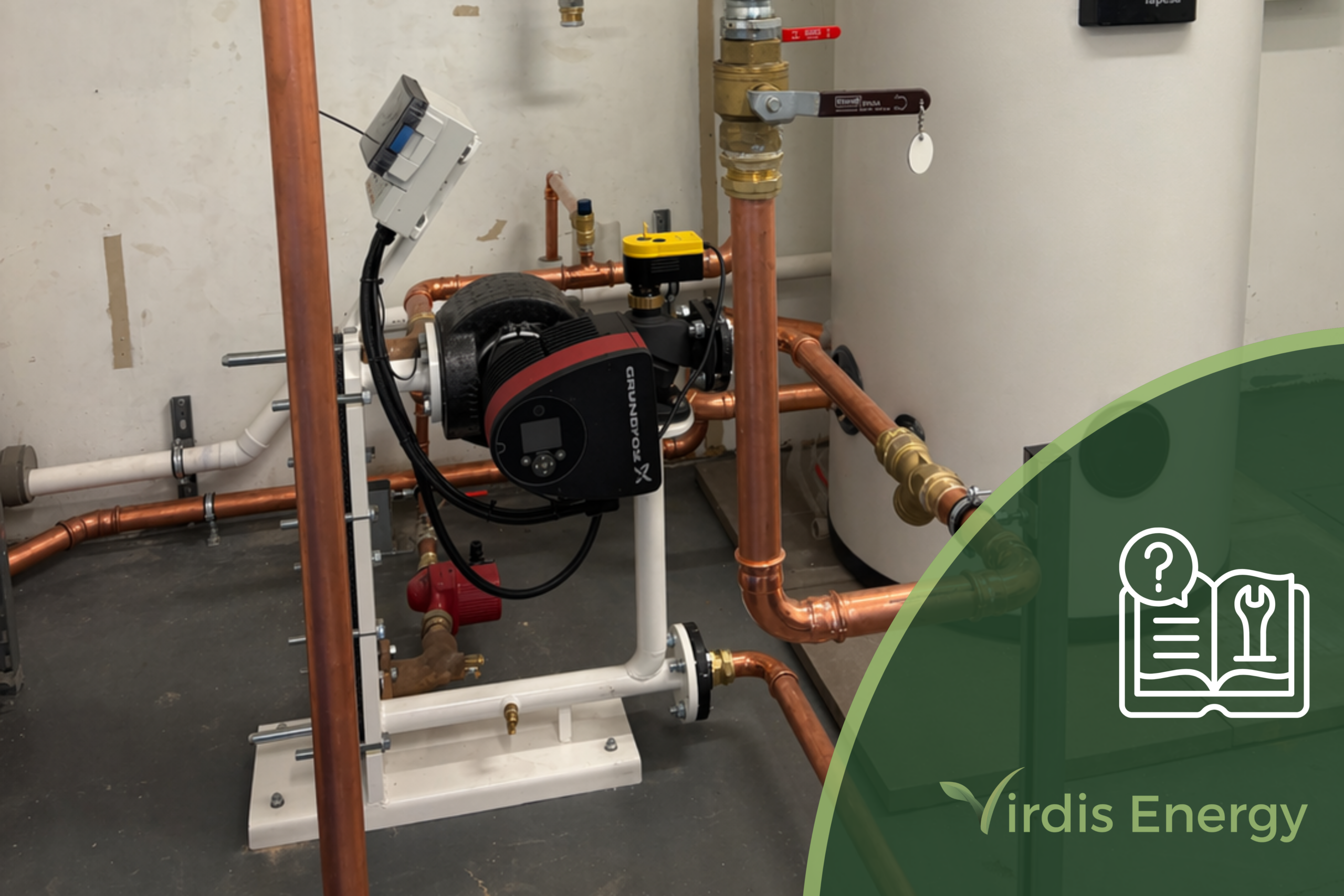
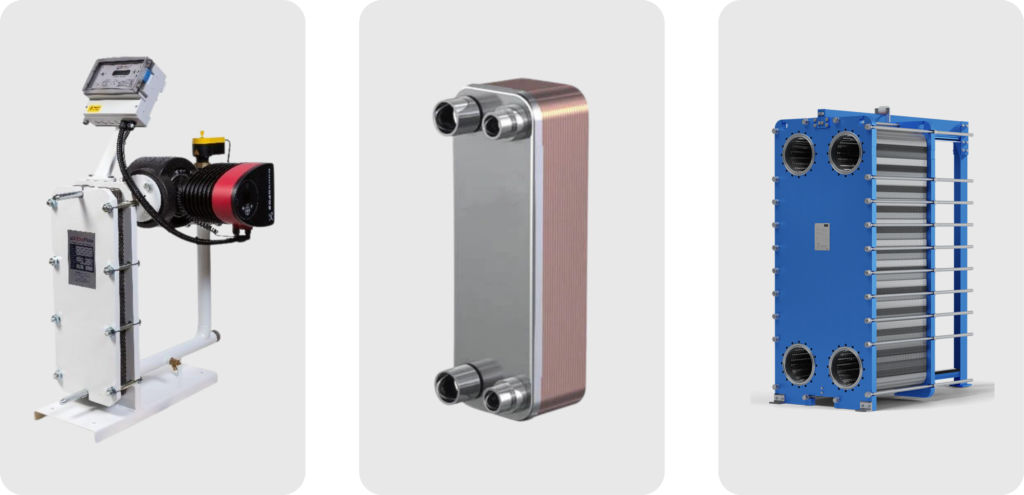
A packaged plate heat exchanger is a ‘plug and play’ solution. It is delivered fully assembled and pre-piped, complete with all necessary ancillaries such as pumps, control valves, sensors, and an integrated electrical control panel, allowing for quick and straightforward installations.
Brazed Plate Heat Exchanger (Bare Unit)
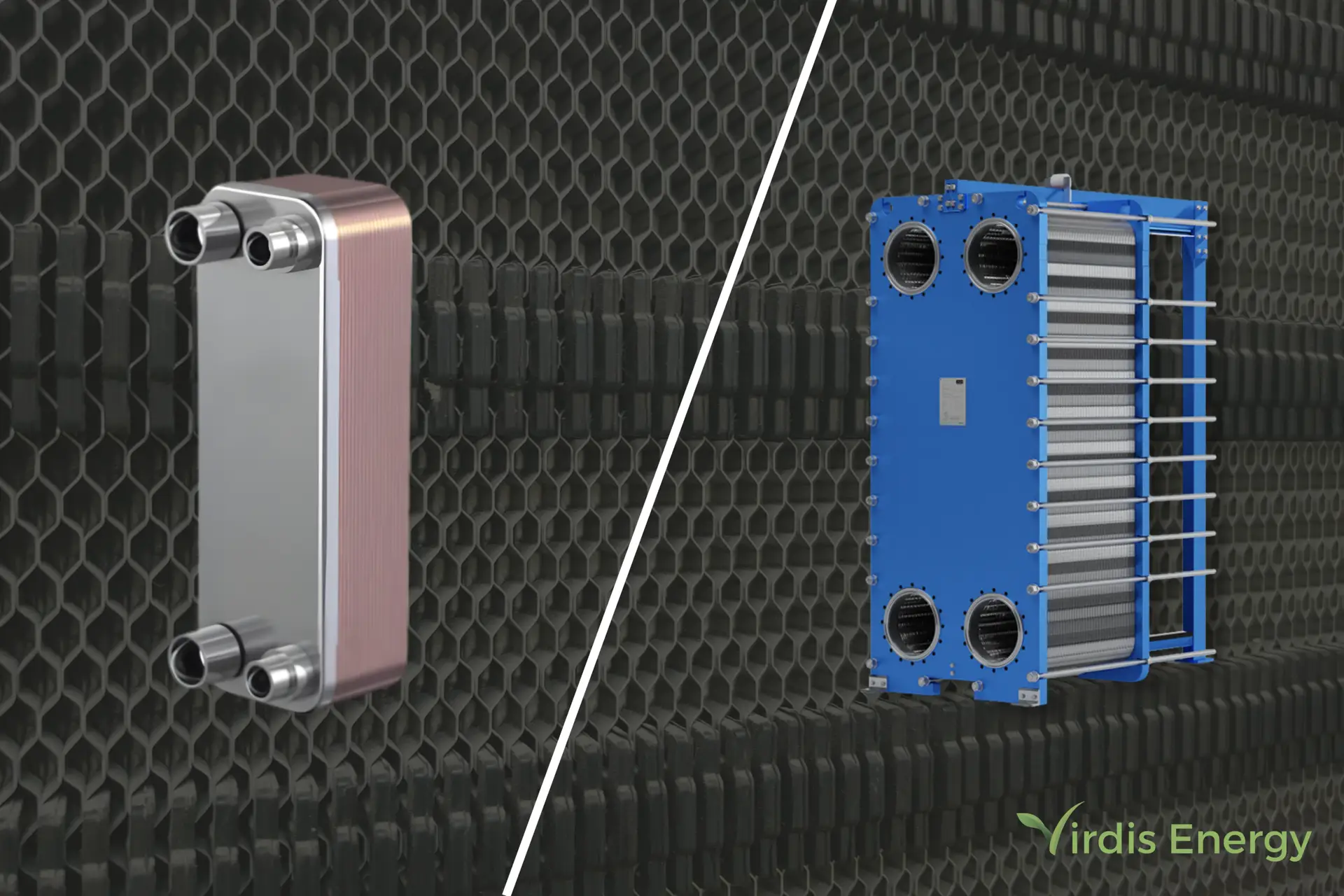
In a brazed plate heat exchanger, traditional gaskets and frames are eliminated. Instead, stainless steel plates are permanently joined using a brazing process, forming a fully sealed, highly pressure-resistant and compact unit. This design makes it ideal for demanding applications where space and durability are critical.
Gasketed Plate Heat Exchanger (Bare Unit)
Gasketed plate heat exchangers use elastomeric gaskets between each plate to seal the flow channels and guide fluid movement. The plate pack is secured and compressed between heavy-duty steel frames using tightening bolts, allowing for easy maintenance, cleaning and future capacity adjustments.
Browse our range of gasketed, brazed and packaged plate heat exchangers
Selecting the Right Plate Heat Exchanger: Packaged vs Gasketed vs Brazed
Choosing the right plate heat exchanger depends on your application, installation constraints and long-term operational needs.
| Type | Packaged PHE | Gasketed Bare PHE | Brazed Bare PHE |
| Construction | Complete skid-mounted system | Bolted frame with gaskets between plates | Plates permanently brazed together (no gaskets or frame) |
| Maintenance | System components accessible for maintenance | Can be disassembled for cleaning, inspection and repair | Not serviceable; typically replaced if performance declines or damaged |
| Size & Weight | Compact skid-mounted unit but larger than a bare PHE | Larger and heavier due to frame and plate pack | Very compact and lightweight |
| Flexibility | Pre-engineered system with limited modification after installation | Highly flexible; plates can be added or removed to adjust capacity | Fixed capacity and not expandable |
| Applications | District heating, commercial buildings & plant rooms | Heavy-duty industrial, food and beverage, chemical processing | HVAC, light commercial heating/cooling, refrigeration |
| Benefits |
|
|
|
Need support choosing? Contact our experts.
Applications of Plate Heat Exchangers
PHEs are widely used across many industries, including:
- Commercial Heating & Hot Water: Hotels, hospitals, offices and residential buildings.
- Industrial Processes: Food and beverage, pharmaceuticals and chemical plants.
- HVAC & Refrigeration: District heating, cooling towers and chilled water systems.
- Renewables & Energy Systems: Heat recovery, biomass and combined heat and power (CHP) plants.
Conclusion
Choosing between a Bare or Packaged Plate Heat Exchanger depends on the unique requirements of your building or project. Bare PHEs offer maximum flexibility and integration potential, while packaged units provide a ready-to-install, fully optimised solution.
At Virdis Energy, we offer a comprehensive range of both Bare and Packaged PHEs, designed for longevity, efficiency and reliability.