
- What is a Buffer Vessel?
- What Does a Buffer Vessel Do?
- Benefits of Buffer Vessels in Heating and Cooling Systems
- Types of Buffer Vessels
- How Do Buffer Vessels Work with Heating Systems?
- Choosing the Right Buffer Tank for Your System
- Installation and Maintenance Tips for Buffer Vessels
What is a Buffer Vessel?
A buffer vessel, also known as a buffer tank, is an essential component in heating and cooling systems designed to store and manage thermal energy. They are used with heat pumps, boilers and other heat sources to store thermal energy and manage peak demand periods, resulting in reliable domestic hot water supply.
Buffer vessels come in various sizes, typically between 200-5000 litres and are available in different materials such as stainless steel and mild steel.
Browse Virdis Energy Buffer Solutions.
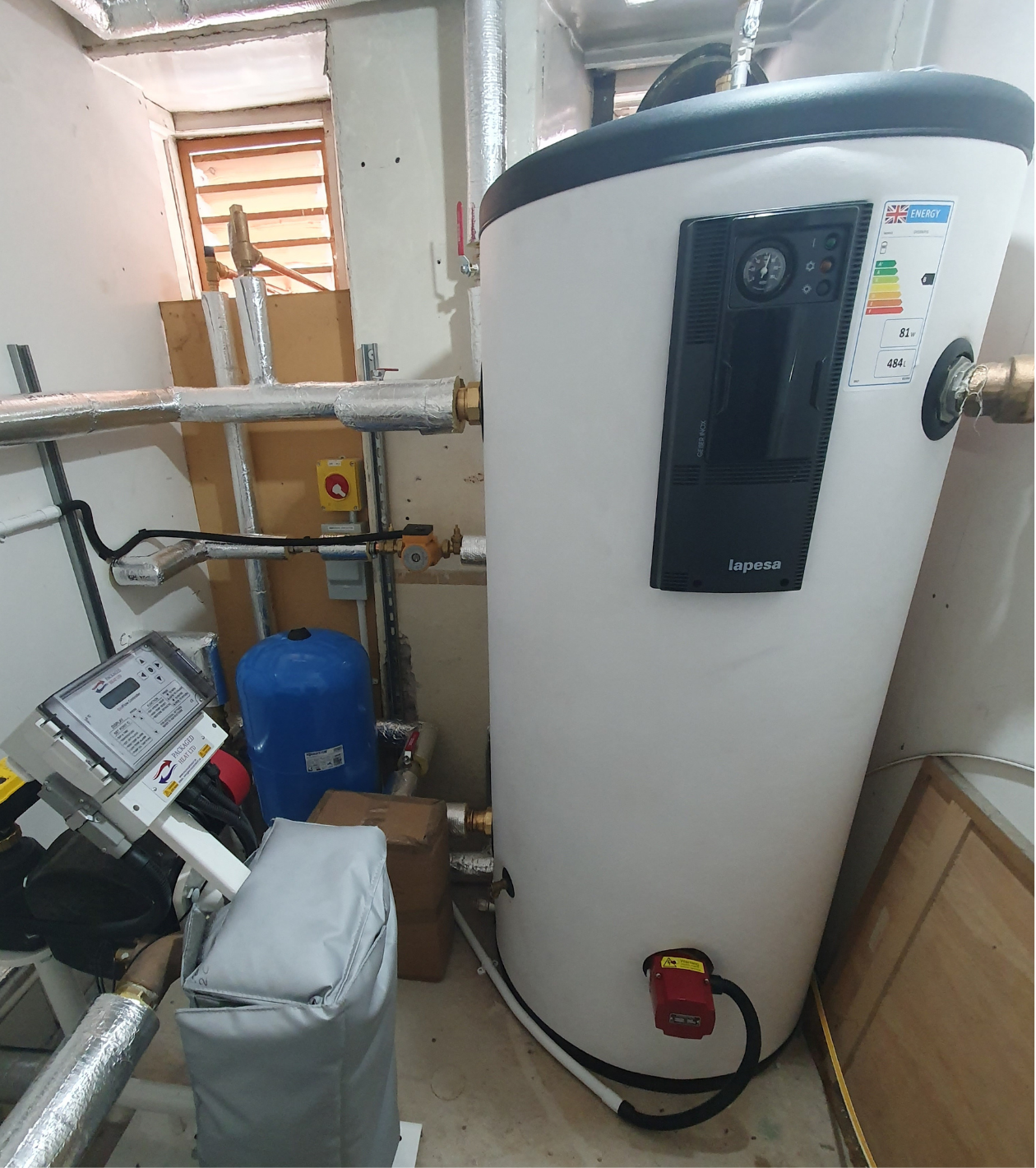
Buffer vessel and packaged plate heat exchanger system at a hotel.
What Does a Buffer Vessel Do?
Buffer vessels improve heating system performance by storing excess thermal energy generated during low-demand periods. Acting as thermal storage tanks, they help regulate temperature fluctuations and optimise overall system efficiency. Their main role is to absorb and release heat when required, ensuring a steady and reliable supply of thermal energy.
Benefits of Buffer Vessels in Heating and Cooling Systems
Enhanced System Efficiency
Buffer vessels enhance system efficiency as they continuously absorb and release thermal energy, helping to maintain stable temperatures and reduce strain on the heating system.
Managing Peak Demand
A critical role of a buffer vessel is to manage peak demand periods. During high demand, the buffer vessel can release stored heat to maintain a consistent temperature, ensuring that the heating system can meet application needs without overloading.
Types of Buffer Vessels
- Stainless Steel Buffer Vessels: Stainless steel buffer vessels are highly durable and corrosion-resistant, making them an excellent choice for residential and commercial applications. They’re often used in systems where the quality of the stored water is a concern.
- Mild Steel Buffer Vessels: Mild steel buffer vessels are a cost-effective option. They are suitable for storing large volumes of water and can be lined to prevent corrosion.
- Solar Thermal Buffer Vessels: These vessels are designed specifically for systems that use solar thermal energy as a heat source. They are optimised to store the heat generated by solar panels and release it when needed, ensuring a consistent hot water or heating supply.
How Do Buffer Vessels Work with Heating Systems?
Buffer vessels support a wide range of heat sources, including heat pumps, packaged plate heat exchangers and boilers.
By storing excess thermal energy and releasing it when required, they help manage fluctuations in heat production and demand, consequently reducing short cycling and improving operational stability.
Choosing the Right Buffer Tank for Your System
Assessing System Requirements
When choosing a buffer tank, it is essential to assess the specific requirements of your heating or cooling system. Factors such as the heat pump capacity, the volume of water needed and the peak demand periods should be considered to ensure that the buffer vessel can meet the system’s needs.
Material Considerations
The material of the buffer tank is another critical factor to consider. Stainless steel buffer vessels are highly durable and resistant to corrosion, making them suitable for systems where water quality is a concern. Mild steel buffer vessels, on the other hand, are more cost-effective and ideal for storing large volumes of water.
Contact our technical team for expert advice and support.
Installation and Maintenance Tips for Buffer Vessels
Professional Installation
Proper installation is crucial for the effective operation of buffer vessels. Ensuring the buffer vessel is correctly integrated into the system will help maximise its efficiency and lifespan. (Remember, you must be gas safe registered to handle plant room installations and maintenance).
Regular Maintenance
Regular maintenance is essential to ensure the continued performance of buffer vessels. This includes checking for any signs of corrosion, ensuring the insulation is intact and monitoring the water levels and temperature. Regular maintenance can help to identify any potential issues early and prevent costly repairs.
Conclusion
Buffer vessels play a critical role in modern heating and cooling systems, providing thermal storage, helping to stabilise temperature and improving system efficiency. Whether used with heat pumps, boilers or renewable energy systems, buffer vessels ensure a consistent thermal energy supply and reduce the system components’ strain.